Building a custom home in Southwest Florida is exciting because it gives you the chance to create a home around your life instead of adapting your life to someone else’s plan. You can choose the neighborhood, shape the layout around your family, create outdoor spaces that invite you to slow down, and select finishes that feel personal rather than predetermined.
At the same time, the decisions made before construction begins often have the greatest impact on the experience and the final result. A beautiful home begins with the right property, a realistic budget, a builder who communicates well, and enough time to think through how the home should serve you today and years from now. When those early pieces are handled thoughtfully, the process becomes far more enjoyable and far less stressful.
Many families and relocators make mistakes not because they are careless, but because custom building is unfamiliar. It is easy to focus on the exciting parts of the project, such as kitchens, pools, and finishes, before fully understanding the lot, the budget, the permitting process, or the long-term needs of the household. A little planning at the beginning can prevent expensive changes later.
Before building a custom home in Southwest Florida, avoid rushing into land purchases, underestimating outdoor living needs, overlooking future lifestyle changes, and choosing a builder without evaluating local experience, communication, and construction quality.
Mistake One: Buying a Lot Before Understanding What It Can Support
Buying land can feel like the natural first step, especially when a desirable lot becomes available in a neighborhood you love. But purchasing a property before involving a knowledgeable Southwest Florida home builder can create challenges that are difficult to see from a listing, a quick drive-by, or even a standard inspection.
A lot may look ideal because of its size, location, or view, but those are only part of the story. Its shape, elevation, drainage, setbacks, easements, utility access, soil conditions, flood considerations, and sun orientation can all influence what can be built and what it will cost. A narrow waterfront site, for example, may offer a stunning view but limit the width, garage configuration, pool placement, or outdoor living area you had imagined.
The best lot is not necessarily the largest one or the least expensive one. It is the lot that supports the kind of home you want to build. A well-positioned property can help you create privacy, capture water views or afternoon shade, and make outdoor spaces more comfortable throughout the year. A poorly matched lot can force compromises before the design process even begins.
Bringing a builder into the conversation before closing on land gives you a more complete perspective. An experienced builder can help you evaluate how the home might sit on the site, what potential challenges may affect the budget, and whether the property truly supports your lifestyle goals. That guidance can be one of the most valuable decisions you make early in the process.
Mistake Two: Choosing a Neighborhood Based Only on the House
When buyers relocate to Southwest Florida, it is easy to concentrate on the home itself. You may be focused on square footage, waterfront access, a pool, a certain architectural style, or the number of bedrooms needed for visiting family. Those details matter, but the neighborhood will shape your experience just as much as the house.
A home can be beautifully designed, yet still feel wrong if the surrounding area does not match your daily routine. Consider how often you want to be near the water, restaurants, golf, shopping, healthcare, family, or the airport. Think about whether you want quiet, low-traffic streets, a marina-and-club atmosphere, a golf-centered setting, or a mature neighborhood with a more established feel.
For families, the right location may involve access to schools, activities, and everyday services. For second-home owners, ease of arrival, maintenance considerations, and proximity to preferred recreation may carry more weight. For retirees, the neighborhood may need to support an active social life today while also offering practical convenience over the long term.
The most successful custom homes reflect both the lot and the neighborhood around them. They do not feel like a generic design placed on a random parcel. Instead, they take advantage of the character of the street, the view, the privacy of the site, and the lifestyle the location makes possible.
Mistake Three: Underestimating Outdoor Living
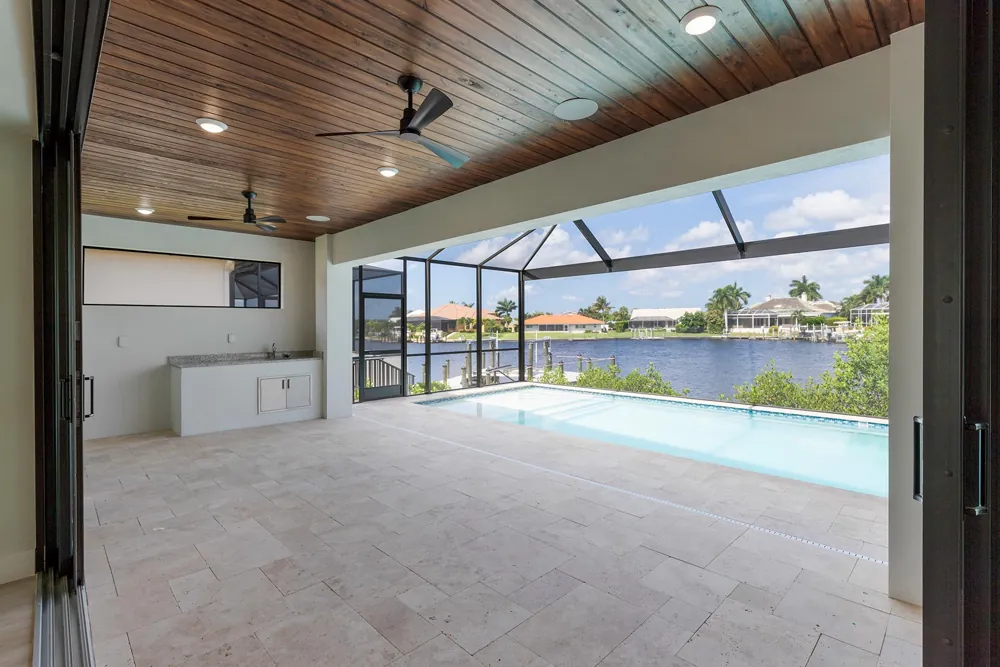
In Southwest Florida, outdoor living is not an add-on. It is a major part of how a custom home should function. Many buyers recognize that they want a pool and lanai, but they may underestimate how much time they will spend outdoors or how many details are needed to make those spaces genuinely useful.
A covered lanai can become an everyday dining area, a quiet morning retreat, a gathering place after a day on the water, or the center of family celebrations. A pool may be a focal point for relaxation, exercise, or entertaining. An outdoor kitchen can make hosting more effortless. These spaces deserve the same thoughtful planning as the kitchen, great room, and owner’s suite.
One common mistake is designing the indoor home first and treating the outdoor area as whatever space remains. That can leave a lanai too shallow for comfortable furniture, a pool placed in harsh afternoon sun, or an outdoor kitchen that feels disconnected from the interior. It can also result in limited privacy from neighboring properties.
The better approach is to design indoor and outdoor living together. Consider how the great room opens to the lanai, where guests will gather, how food will move from the kitchen to the outdoor dining area, and where shade will be available. On waterfront properties, think about the connection between the pool area, the dock, and the view. In golf communities, consider how landscaping and architecture can protect privacy without blocking the outlook that drew you to the lot.
When outdoor living is treated as an essential part of the home, the result feels more natural, more comfortable, and much more connected to Southwest Florida’s lifestyle.
Mistake Four: Designing Only for Today
A custom home should reflect how you live now, but it should also remain comfortable and relevant as your life changes. This is especially important for buyers who are building a retirement home, relocating for the long term, or creating a home where children and grandchildren will visit often.
One of the most common planning mistakes is focusing entirely on immediate wants without considering future needs. A two-story plan may suit you today, but will it still feel convenient years from now? A large open space may look impressive, but will it provide enough quiet rooms for work, hobbies, overnight guests, or private conversations? A guest suite may be used occasionally now but become increasingly important as family visits become more frequent.
Future-ready design does not mean sacrificing style for practicality. It means making thoughtful choices that preserve flexibility. A first-floor owner’s suite, wider circulation areas, a flexible room that can become an office or guest room, and easy access to outdoor spaces can all help a home adapt gracefully. Storage also matters more than buyers often expect, especially for seasonal items, sports equipment, boating gear, and household supplies.
It is also wise to think about maintenance. Homes with complex rooflines, overly delicate materials, or difficult-to-access systems may look impressive at first but require more attention over time. A knowledgeable builder can help you choose materials and details that suit the climate while supporting the level of upkeep you are comfortable with.
Mistake Five: Setting a Budget Without Enough Detail
A custom home budget is not simply a construction number. It includes a full set of decisions related to the property, design, site conditions, permitting, construction, finishes, landscaping, pool features, furnishings, and potential allowances for changes. Buyers who begin with a broad estimate but do not explore these components closely can be surprised later.
This does not mean you need every finish selected before the first conversation. It does mean you should be open about priorities from the beginning. Are you willing to invest more in a waterfront lot and simplify the home? Is an expansive outdoor kitchen more important than a formal dining room? Do you care most about impact-rated glass, premium appliances, a large garage, or elaborate interior finishes? Knowing what matters most helps the design team make intelligent tradeoffs.
A realistic budget should also account for the site. Waterfront lots, older properties requiring demolition, unusual soil conditions, seawall work, elevated construction, and complex permitting can all affect costs. These factors are not reasons to avoid a project; they are reasons to understand the project clearly before making commitments.
The strongest builder relationships are built on honest conversations about budget. A good builder should help you align the size, design complexity, site conditions, and finish level with the investment you want to make. That clarity protects the project from late-stage disappointment and helps keep decisions grounded throughout the process.
Mistake Six: Selecting a Builder Too Late
Some buyers wait until they have purchased land, chosen a plan, or even started working with a designer before speaking with a builder. While every project follows its own path, involving the builder early can make the entire process more coordinated.
A builder with local experience can help evaluate potential sites, identify practical concerns, and offer insight into how a design will translate into actual construction. They can also help you understand the impact of decisions that may look minor on paper but have meaningful implications for cost, timing, functionality, and durability.
In Southwest Florida, local construction knowledge is especially important. Coastal conditions, wind requirements, elevation, drainage, materials, and permitting all require careful attention. A builder who understands how homes perform in this environment can guide decisions well before construction begins.
Early builder involvement also supports better communication among the full team. Rather than creating a beautiful plan that later must be revised to fit the lot, budget, or permitting realities, the builder, designer, and homeowner can work together with the same goals in mind. That collaboration helps maintain momentum and reduces the likelihood of avoidable redesigns.
Mistake Seven: Choosing a Builder Based Only on Price
It is natural to compare estimates, especially for a major investment like a custom home. However, choosing a builder based only on the lowest initial number can lead to frustration if the scope, quality standards, allowances, communication, or service level are not truly comparable.
A lower price may reflect a smaller scope, lower-grade materials, limited design flexibility, or unrealistic assumptions. It may also leave out costs that will be added later. The goal is not simply to find the lowest number. It is to understand what is included, how the builder manages changes, and whether the project is being priced in a clear, responsible way.
The right builder should be able to explain their process in understandable terms. They should listen to your goals, answer questions directly, and be comfortable discussing how they approach budget, schedules, communication, selections, and quality control. You should feel respected as a partner in the process, not pressured to make quick decisions.
It is also worth asking about the builder’s experience with homes similar to yours. If you are considering a waterfront home, look for relevant waterfront and coastal construction experience. If you are building in an established neighborhood, ask how they handle lot evaluation, demolition, neighborhood fit, and local approvals. If the home will be a second residence, ask how they keep out-of-state clients updated throughout construction.
Price matters, but confidence, clarity, craftsmanship, and long-term value matter too.
Mistake Eight: Not Asking Enough Questions About Hurricane-Ready Construction
A custom home in Southwest Florida should be designed for beauty, comfort, and resilience. Yet some buyers assume that modern code requirements alone answer every question about storm preparedness and coastal durability. Building code compliance is essential, but an informed buyer should still understand how the home will be designed and built for the local environment.
Ask how the builder approaches structural engineering, roof systems, impact-rated openings, drainage, elevation, moisture management, and material selection. Learn how the home’s components work together to create a strong, weather-resistant structure. The goal is not to become a construction expert overnight. It is to choose a builder who can explain these matters clearly and demonstrate a thoughtful approach.
This is particularly important for homes near the river, canals, the coast, or low-lying areas. The design must account for the property’s specific conditions, not simply follow a one-size-fits-all model. Site preparation, water management, exterior materials, and outdoor features all deserve attention.
A home that is thoughtfully engineered for Southwest Florida offers more than practical protection. It gives you the confidence to enjoy the lifestyle you came here for, knowing that the home has been built with the environment in mind.
Mistake Nine: Rushing the Design and Selections Process
Custom building takes time because thoughtful decisions take time. Rushing through early design or finish selections can create a home that is technically complete but does not feel as cohesive or personal as it could have.
Buyers sometimes make fast choices because they feel overwhelmed by the number of options. This is understandable. There are finishes, lighting plans, cabinetry details, flooring, countertops, appliances, plumbing fixtures, exterior materials, pool elements, and more. But those decisions are easier when they are organized around a clear overall vision.
Rather than treating selections as isolated choices, think about the experience you want the home to create. Do you want relaxed coastal warmth, refined contemporary simplicity, classic elegance, or a blend of styles? How should the home feel in the morning, during family visits, and when you entertain in the evening? When decisions are connected to a larger vision, the process becomes more focused.
A good builder and design team will help you make choices in logical phases. They should help you understand which decisions need to happen first, where it makes sense to invest, and how different materials will perform in the local climate. The result is not simply a collection of expensive finishes. It is a home where every room feels connected and considered.
Mistake Ten: Forgetting That the Process Should Feel Personal
A custom home is a deeply personal project. It should be exciting, collaborative, and grounded in trust. Yet some buyers assume that stress, confusion, and poor communication are simply part of the process. They do not have to be.
There will always be decisions to make and details to manage, but you should feel informed throughout the journey. You should know what is happening, what choices are coming next, and how the project is progressing. This is especially important for relocators and second-home owners who may not be on site regularly.
The best relationships are built on communication. Your builder should be accessible, organized, and proactive. They should bring questions and solutions to you early, not wait until a problem becomes urgent. They should explain the process in plain language and help you feel comfortable asking questions at every stage.
When communication is strong, the custom home process becomes more rewarding. You are not simply waiting for a finished house. You are participating in the creation of a home designed around your life, your priorities, and the place you have chosen to call home.
Start with the Right Foundation
The best custom homes begin long before the foundation is poured. They begin with thoughtful questions about location, lifestyle, budget, outdoor living, future needs, and the team you want beside you. Taking the time to answer those questions early can help you avoid costly detours and make the building experience much more rewarding.
Whether you are relocating to Southwest Florida, planning a family home, or designing a long-awaited retreat, the goal is the same: create a home that fits your life, your lot, and the way you want to enjoy this remarkable part of Florida. With the right planning and the right builder relationship, your custom home can feel not only beautiful on move-in day, but right for years to come.