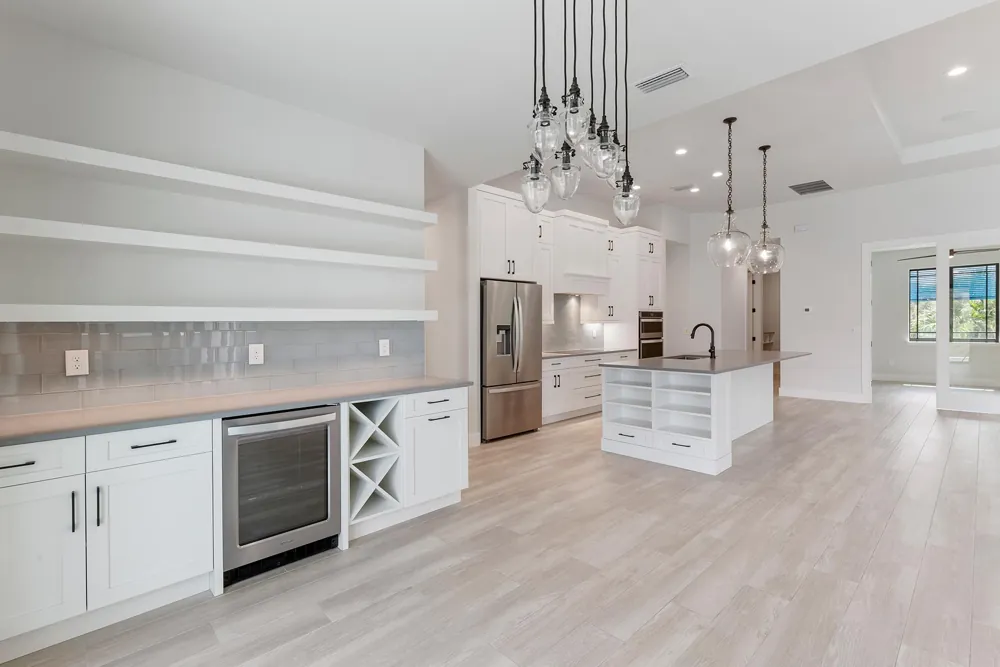
Choosing among home builders in SW Florida is one of the most important decisions you will make before building a custom home. The right builder does more than construct a beautiful house. They help you evaluate your lot, translate your lifestyle into a thoughtful design, guide you through hundreds of decisions, manage the details behind the scenes, and remain accountable after you move in.
It is understandable to begin by comparing prices. A custom home is a significant investment, and every buyer wants to spend wisely. But price alone rarely tells the full story. Two proposals can appear similar while including very different levels of design flexibility, construction quality, client communication, allowances, site preparation, hurricane-ready features, and warranty support.
The goal is not simply to find the lowest estimate. It is to find a builder who delivers the best overall value for your priorities, your property, and the life you want to create in Southwest Florida. That means looking beyond a starting number and asking how each builder approaches quality, customization, service, and long-term performance.
To compare custom home builders in Southwest Florida, look beyond the initial price and evaluate local experience, construction quality, communication, customization, warranty support, and the builder’s ability to create lasting value for your specific lot and lifestyle.
Start by Comparing Relevant Experience
Not all builders have the same type of experience, and that distinction matters. A builder who primarily produces high-volume homes in new communities may not be the right fit for a fully custom waterfront home, a teardown and rebuild in an established neighborhood, or a highly personalized second residence.
Begin by considering the kind of project you want to build. If your plans involve a waterfront lot, ask whether the builder has experience with riverfront, canal-front, or coastal properties. If you are building in an established neighborhood, ask how they approach site evaluation, demolition, setbacks, drainage, privacy, and neighborhood character. If your home will be in a golf or club community, ask whether they understand architectural review procedures and the expectations that come with building in that environment.
Experience in Southwest Florida itself is equally important. Homes here must perform in a climate shaped by intense sun, heat, humidity, rain, wind, and coastal conditions. A local builder should understand how those realities influence structural planning, material choices, roof systems, outdoor living, drainage, and long-term maintenance.
A strong portfolio should show more than impressive photography. It should demonstrate variety, thoughtful design, quality craftsmanship, and homes that fit their surroundings. As you review completed work, consider whether the homes feel tailored to their lots and owners or whether they look like the same plan repeated with different finishes.
Look Beyond the First Price
When comparing southwest Florida builders, one of the easiest mistakes is assuming that the lowest proposal represents the best value. In custom construction, a lower number can sometimes reflect a narrower scope, smaller allowances, fewer included features, or assumptions that may change once construction is underway.
The question is not simply, “What is the total?” It is, “What does that total include?” Ask each builder to explain how they handle site work, permitting, engineering, utility connections, landscaping, pools, outdoor kitchens, appliances, specialty finishes, and contingency planning. Those details can make a meaningful difference in the final investment.
It is also important to understand allowances. An allowance is a budgeted amount for an item that has not yet been fully selected, such as flooring, cabinetry, lighting, appliances, or plumbing fixtures. If allowances are unrealistically low, the original proposal may look attractive but become less accurate as you choose the finishes you actually want.
A responsible builder should be willing to discuss costs openly and help you align your vision with a realistic budget. That does not mean every number will be final before plans are complete, but it does mean you should receive clear guidance about what is driving the investment and where choices may affect it.
The best value comes from a home that is carefully planned, properly built, and appropriate for your long-term goals. It is rarely the result of choosing the lowest starting figure without understanding the details behind it.
Compare the Customization Process
“Custom” can mean very different things depending on the builder. Some builders offer a limited collection of plans with selected changes available. Others begin with your lifestyle, your lot, and your priorities, then develop a home specifically around those factors.
There is nothing inherently wrong with a plan-based approach if it fits what you want. But if your goal is a home that responds to water views, sun orientation, family routines, privacy, entertaining, hobbies, or long-term needs, ask how much flexibility the builder truly provides.
A meaningful custom process begins with questions. How will you use the home? Is it a primary residence, a seasonal home, or a gathering place for family? Do you want one-level living? How important are outdoor spaces? Will the home support boating, golf, work from home, visiting grandchildren, fitness, or entertaining?
The builder should also study the lot before finalizing the design. A well-designed home takes advantage of the site rather than trying to force a preexisting plan onto it. Window placement, garage location, outdoor living, pool orientation, owner’s suite privacy, and view corridors should all be considered early.
Ask each builder how design revisions are handled and when construction input is incorporated. The strongest process is collaborative. It gives you room to refine ideas while ensuring that the home remains buildable, appropriately budgeted, and well suited to Southwest Florida conditions.
Pay Attention to Communication
A custom home takes time, and clear communication can make the difference between an enjoyable experience and a frustrating one. This is especially important for relocators, second-home owners, and clients who cannot visit the job site every week.
Ask each builder how they communicate during pre-construction and throughout the build. Will you receive regular progress updates? Are there scheduled meetings, site walk-throughs, photographs, online project updates, or a designated point of contact? How are questions, selections, and change requests documented?
Communication is not just about receiving good news. It is about how the builder handles questions, choices, and unexpected conditions. Every construction project includes decisions and occasional adjustments. The right builder communicates early, explains the issue clearly, and comes prepared with practical solutions rather than surprises.
Pay attention to your first conversations. Does the builder listen carefully? Do they ask thoughtful questions? Are they willing to explain technical details in plain language? Do you feel rushed, pressured, or brushed aside? The relationship you experience during the selection process is often a good indication of what the working relationship may feel like later.
A builder who is organized, accessible, and respectful gives you more than convenience. They give you confidence throughout a complex investment.
Evaluate Construction Quality and Resilience
The beauty of a custom home is important, but what is behind the walls matters just as much. In Southwest Florida, construction quality must include thoughtful attention to hurricane readiness, moisture management, drainage, structural engineering, roofing, and durable materials.
Ask builders how they approach wind-load requirements, impact-rated windows and doors, roof systems, structural connections, elevation, and water management. A qualified builder should be comfortable discussing how these elements work together to protect the home and support long-term performance.
This is especially important for waterfront properties, lots in flood zone areas, and homes exposed to open views or coastal conditions. The design should account for the property itself rather than rely on a generic approach. Drainage, grading, roof details, outdoor materials, and openings all need to work together in a climate that can be demanding.
It is also wise to ask about the trades and suppliers a builder uses. Strong subcontractor relationships can be a meaningful indicator of consistency and quality. A builder who has worked with reliable trade partners over many years is better positioned to maintain standards and solve problems efficiently.
When visiting completed homes, look carefully at the details. Notice the alignment of cabinetry, tile work, trim, door reveals, transitions between materials, and the way indoor spaces connect to lanais and pools. Luxury craftsmanship often appears in the small details that are easy to overlook at first but matter every day once you live in the home.
Understand Warranties and Post-Construction Service
A home warranty is not merely paperwork completed at closing. It is part of the builder’s commitment to the home and to the relationship after move-in. Before choosing among south west Florida builders, ask how each company handles warranty service and what support is available once construction is complete.
You should understand what is covered, how long coverage applies, who to contact with a concern, and how warranty requests are managed. Ask whether the builder conducts a final walk-through, how punch-list items are addressed, and whether there are follow-up visits after move-in.
The details of warranty coverage matter, but responsiveness matters too. A builder may offer a strong written warranty, yet the client experience will depend on how quickly and professionally concerns are handled. Ask former clients about this part of the process if possible. Did the builder remain accessible? Were issues addressed fairly? Did the homeowner feel supported after closing?
A builder who takes post-construction service seriously demonstrates confidence in their work. More importantly, they recognize that handing over the keys is not the end of the relationship. It is the beginning of your experience living in the home they built.
Consider Long-Term Value, Not Just Immediate Appeal
A custom home should feel exciting when you first walk through it, but it should also remain comfortable, efficient, durable, and desirable over time. That is why long-term value belongs in every builder comparison.
A well-built home in Southwest Florida balances current style with lasting design principles. It should have a layout that supports daily life, quality systems that perform reliably, materials suited to the climate, and details that do not feel dated too quickly. The builder should help you make choices that are personal without becoming so narrow that the home loses future flexibility.
Long-term value also comes from how the home fits the lot and neighborhood. A house that is thoughtfully proportioned, properly oriented, and designed to enhance its setting tends to age more gracefully. This matters whether you plan to live there for decades or view the property as part of a broader investment strategy.
For buyers considering waterfront homes, the builder’s ability to design around views, privacy, outdoor living, docks, and coastal resilience becomes especially important. For homes in established neighborhoods, respect for streetscape, lot scale, and neighborhood character can protect both livability and resale appeal.
The right builder does not simply help you build for the moment. They help you make choices that support lasting enjoyment and lasting value.
Ask About the Complete Process
Many buyers want to know whether builders manage everything or whether they need to coordinate separate teams themselves. The answer varies, but a strong custom builder should be able to explain exactly how they manage the project from the first conversation through final delivery.
Ask how the builder handles lot evaluation, design collaboration, engineering, permitting, site preparation, construction, selections, quality control, and warranty service. Clarify who coordinates architects, designers, engineers, surveyors, and trade partners. Understand what decisions will require your approval and how the builder keeps the project moving between those decisions.
A full-service approach can be especially valuable if you are building from out of state or managing a second home. It gives you a central partner responsible for coordinating the details, while still allowing you to remain involved in the creative decisions that matter most.
The process should feel clear, even if the home itself is complex. You should know what happens first, what comes next, and who is responsible at every stage. If a builder cannot explain their process clearly before the project begins, it may be difficult to expect clarity once construction is underway.
Trust the Fit, Not Just the Features
After you compare experience, pricing, customization, quality, communication, warranties, and long-term value, there is still an important final consideration: how does the relationship feel?
You will spend months making decisions with this builder. You may share personal details about your family, your finances, your schedule, and the way you want to live. You need to trust that the builder respects your investment and will communicate honestly when decisions become complicated.
The right fit is not about choosing the most polished presentation or the largest company. It is about finding a builder who listens, follows through, brings experience without arrogance, and takes humble pride in the homes they create.
A good builder understands that the home is not their home. It is yours. Their role is to bring knowledge, craftsmanship, structure, and guidance to the process while helping your vision take shape. When that mindset is present, the experience feels less transactional and more like a genuine partnership.
Make the Decision with Confidence
Comparing builders takes time, but that time is well spent. The right builder can help you avoid costly mistakes, clarify your investment before construction begins, create a home that fits your lifestyle, and guide the project with steady communication from start to finish.
As you narrow your choices, look for more than a polished proposal. Look for experience that matches your project, craftsmanship that holds up to Southwest Florida conditions, a process you can understand, and a relationship built on trust. That is how you move forward with confidence—and how you create a custom home you will be proud to enjoy for years to come.